Secured Solution Secured Solution

Digitize Log Management Like Never Before With VeriDoc Logbook!

VeriDoc Logbook is a one-of-a-kind digital solution to collect, store, and verify records of guests visiting your premise. Now increase your productivity without hampering anyone’s security.

Verification preview with QR code, lock, and ledger details - Mobile
  • Card 1 icon

    Less than 15 minutes

    median turnaround*

  • Card 2 icon

    $ 30.00

    saved per document*

  • Card 3 icon

    99.9 %

    uptime SLA

  • Card 4 icon

    REST API

    for custom flows

Take a 2-Minute Interactive Tour

See how VeriDoc Logbook works.

veridoclogbook.com

Quick Tour

See how VeriDoc Logbook works.

Step 1 Image

Why Authenticity Matters

Document verification preview

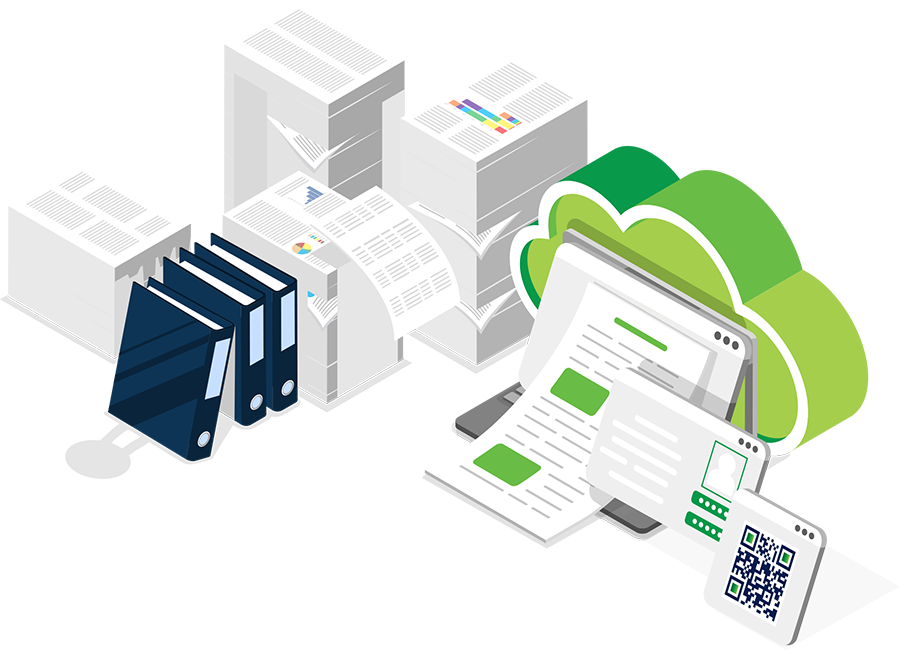
Without VeriDoc Logbook

  • You have to juggle between managing visitors and keeping their records manually, every time.
  • Organisations & venues will lose loads of valuable time and money.
  • Guest records will not be secured and might be vulnerable to fishy activities.

With VeriDoc Logbook

  • Managing and tracking hundreds of visitors becomes so simple & contactless.
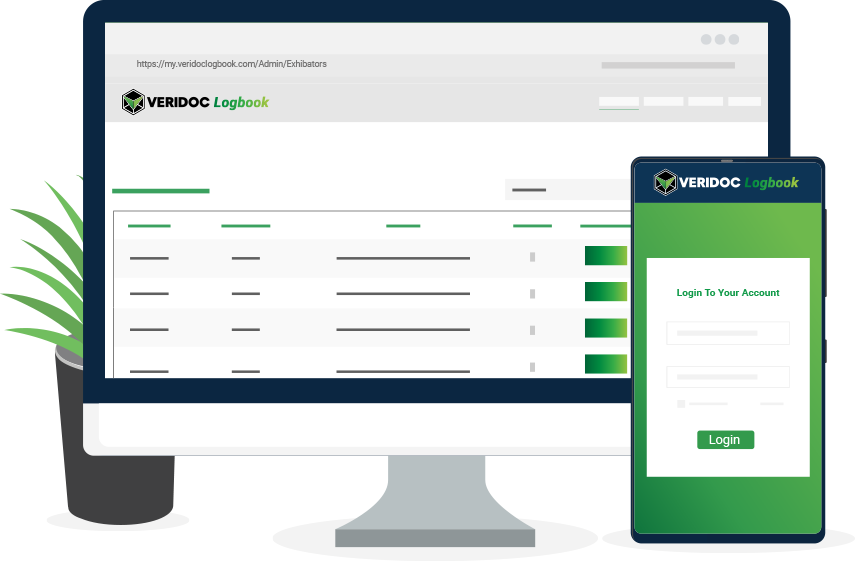
  • You can log in from any device and get access to the collected records.
  • No manual recordkeeping is needed, just ask your visitors to scan a QR code and all the necessary information is right at your fingertips.

What Our Customers Say

VeriDoc Logbook has streamlined our entire compliance process. What used to take hours of manual checking now takes minutes. The QR verification feature is a game-changer.

Angela Ramos

VP Sales, Pacific Freight Solutions (Philippines)

We’ve eliminated paperwork completely. Our team updates logs instantly from their phones, and management can review everything in real time. It has made audits stress-free.

Michael Mensah

Compliance Lead, Korba Microfinance (Ghana)

Our business handles multiple locations, and VeriDoc Logbook helps us monitor every site effortlessly. Centralized dashboards and automatic reminders keep us fully aligned.

Rajiv Kapoor

Zenova Biotech (India)

Before this, our logbooks were messy and inconsistent. Now everything is clean, consistent, and audit-ready. VeriDoc Logbook has improved our overall operational discipline.

Johan Pretorius

Procurement Director, CapeMetro Utilities (South Africa)

Real-time reporting is the biggest win for us. We can track activities instantly, respond faster, and maintain full compliance without any manual follow-ups.

Oscar Villalobos

Treasury Controller, AgroMercantil Bank (Mexico)

The accuracy and transparency we get through VeriDoc Logbook is unmatched. Every entry is timestamped, validated, and easy to track. It’s exactly what we needed.

Emily Chen

CFO, BluePeak Manufacturing (Malaysia)

Staff onboarding became so much easier. We simply scan, log, and verify. Zero confusion, zero missing records. It’s the best digital logbook system we’ve used.

Sara Abdullah

People Operations Manager, SwiftHire BPO (UAE)

The platform is incredibly intuitive. Even our non-technical team members adapted quickly. The boost in efficiency and accountability is noticeable across departments.

Maria Lourdes Dizon

Operations Manager, UnionLife Insurance (Philippines)

Why Teams Choose
VeriDoc Logbook

Secured QR Code Authentication

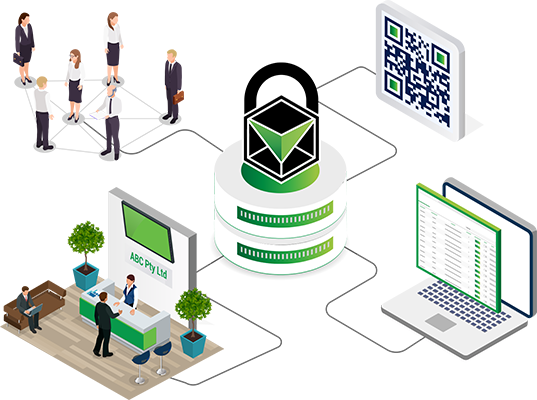
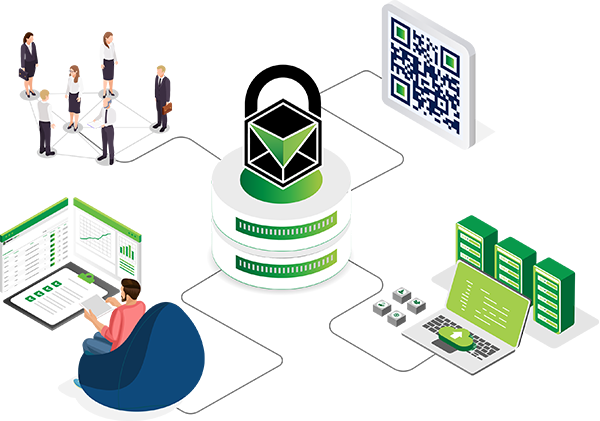
VeriDoc Logbook provides you with verifiable QR codes that can be easily linked with a particular table or guest area. This helps you to track the number of guests present there and all their required information.

Easy Record-keeping & Management

No longer will you keep your guests waiting. They can easily scan and digitally fill out all the required details. Venue managers will have all the guest details at their fingertips, all the time.

Blockchain Protection

With VeriDoc Logbook, you need not ever worry about information tampering or leakage. All the sensitive guest information is stored in the blockchain and can be accessed only by the right person/people.

Connect Your Stack in Hours

Connect your workflows, automate data entry, and keep every record synchronized across your entire ecosystem without disrupting operations.

How It Works — 3 Simple Steps

From task to verified record in three clicks.

  1. No complex setup — Start instantly with ready-to-use digital logbook templates.
  2. Smart automation — Capture, store, and verify activity logs in minutes.
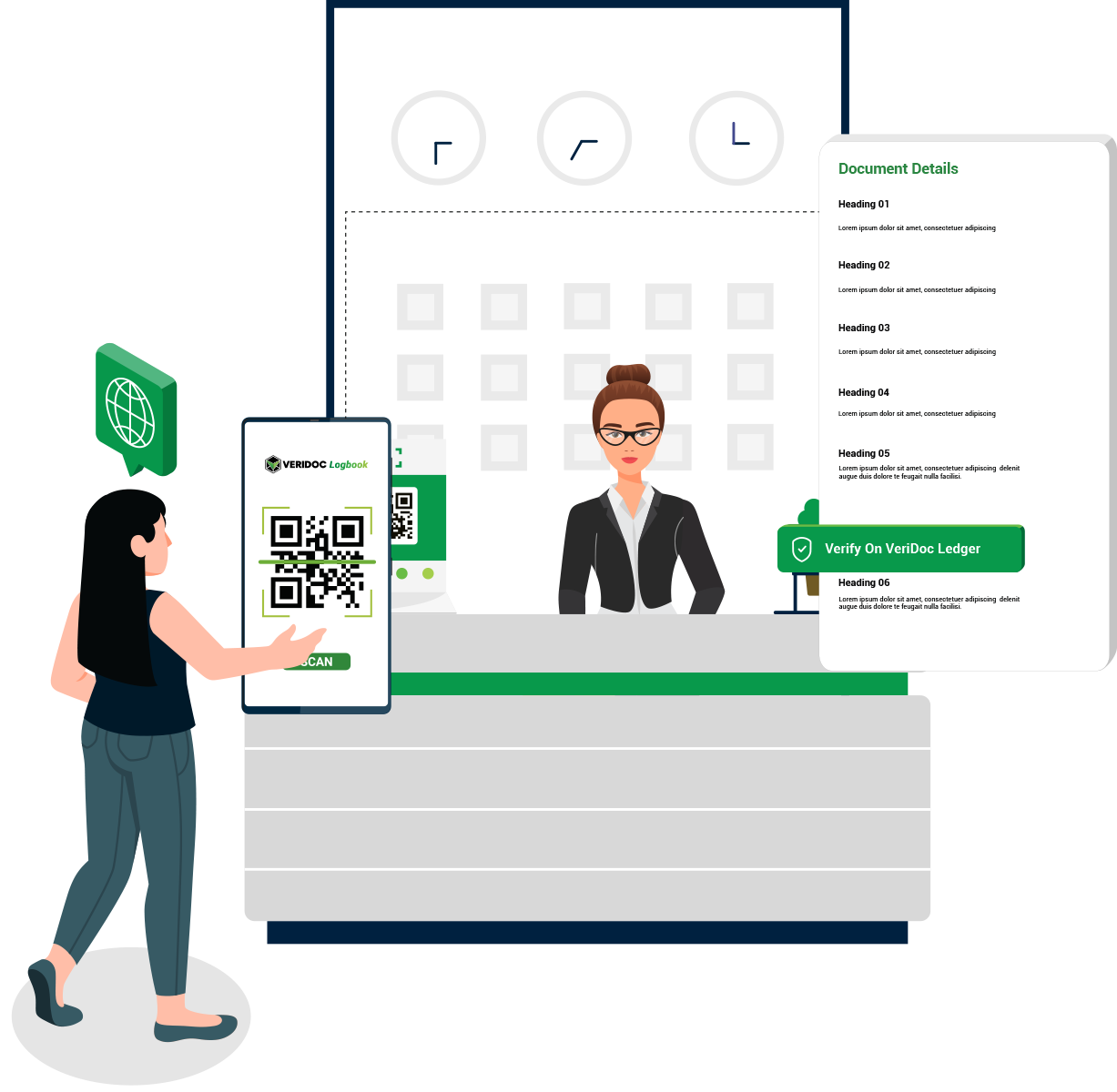
  3. Instant proof — Scan the QR code to confirm authenticity anytime, anywhere.

Create Log Entry Using a Template

Start by selecting or creating a logbook template that suits your operational workflow. VeriDoc Logbook lets you build your own structure or adapt an existing layout—while keeping every entry consistent and compliant.

Optional Power-Ups

Add your logo, authorised users, and colour themes to align each log entry with your organisation’s brand.

Define reusable input fields—such as Task Type, Date, Time, Location, and Assigned Staff—to simplify future log entries.

Save your customised templates for repeated use, ensuring accuracy, consistency, and faster record creation every time.

Fill In Log Entry Details

Once your template is ready, enter the required information for each log entry:

In this step, you can:

  1. Activity Details
    • Task type, description, date, and time.
  2. Operational Information
    • Location, assigned staff, reference number, or equipment ID.
  3. Verification Metadata
    • Automatically generated QR code and secure record ID for tamper-proof validation.

Save, Generate & Verify

Once you’ve filled in all log entry details, VeriDoc Logbook:

  1. Creates a secure, tamper-proof digital record, embedded with a unique QR code.
  2. Generates verification data you can:
    • View instantly on the verification page.
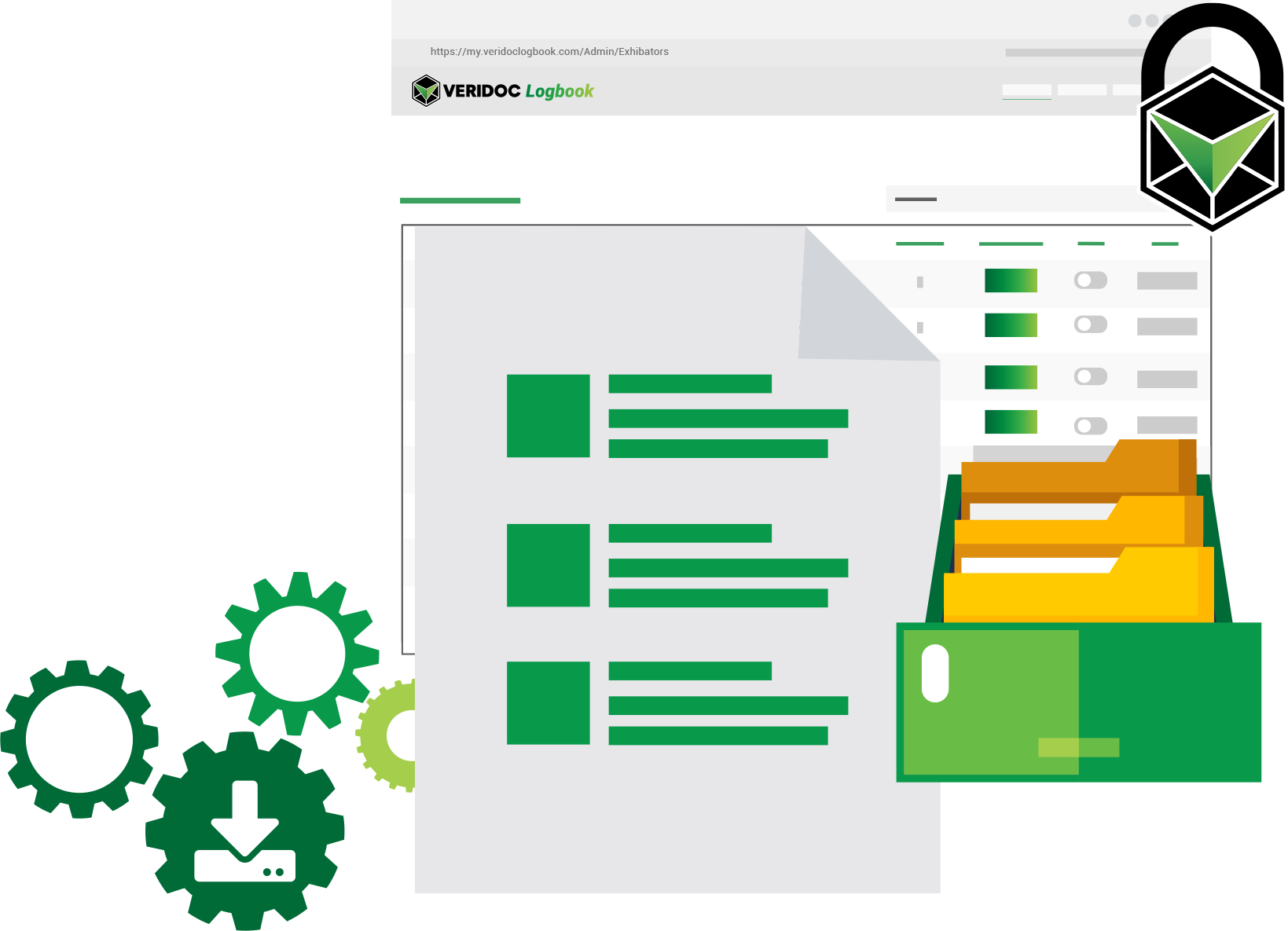
    • Download as a detailed report for audits or compliance checks.
    • Reuse as a pre-filled template to speed up future logging and maintain consistency.

Leaves you with a VeriDoc-Verified log entry that anyone can authenticate within seconds simply by scanning the QR code.

Simple, Predictable Pricing

VeriDoc Logbook pricing lets you try us out FREE for 30 days before you commit.

Monthly Fee
$0 (10 days)
Envelopes / Month
10
Users
Unlimited
Monthly Fee
$30
Envelopes / Month
20 (rollover)
Users
Unlimited
Monthly Fee
$100
Envelopes / Month
75 (rollover)
Users
Unlimited

Considering VeriDoc Logbook?

Our monthly plans include unlimited users but a set number of Logbook.Slow month? No worries your unused Logbook roll over to the next.
Compare Now

Tamper-proof Records

  • VeriDoc Logbook is designed to make your job easier.
  • With us you can record, track, & manage your guests within seconds.
  • All the information is securely stored in the blockchain, making it tamper-proof from any fraudulent activities.
Upcoming features preview

Frequently Asked Questions

Customers can benefit from SaaS businesses in a variety of ways, such as finding a ride or a song they like, hosting massive amounts of data, or running multiple field agents. There are numerous advantages to using SaaS for businesses, including lower upfront costs of commercial software, the elimination of the need to install software on individual machines, service scalability with business growth, integrations with popular software, and prompt updates to all users.
Here are some expert guides you need to keep in mind before adopting any SaaS service:
As they are supposed to be designed with best practices at the core, SaaS applications should be user-friendly. Look for options that allow you to first demo and test the software, for free.
When allowing a SaaS service provider to maintain your sensitive data, one of the most important factors to consider is data security. However, the practice of doing everything online has resulted in strict security and safety parameters.
In the last five years, SaaS has become an extremely competitive space, driving down prices and allowing you to shop around for a price that fits your budget. SaaS should provide any business, but especially small and medium-sized businesses, with the benefits of traditional software at a lower cost-benefit ratio.
Organizations can enjoy the advantages of SaaS solutions that many in the private sector already know, such as increased savings, improved data collection, increased team efficiency, sustainability, and greater adaptability in service delivery.

With the rise in cyber security concerns and data breaches, most reputable organisations utilise QR verification to check the authenticity of documents stored in the blockchain. Scanning a secure QR code starts a real-time sequence of technology-based verification steps. This includes ensuring that the original document stored on Amazon S3 has not been edited or tampered with. To verify the authenticity of a document, the globally patented verification protocol uses the unique digital fingerprint of a document, also known as a unique hash value. This ensures that any confidential or sensitive contents of a document are always protected and that GDPR and other privacy standards are met.
The QR code authentication ensures that you can track all of your users’ and viewers’ activities on any uploaded document. Depending on your preferences, you can place the QR code anywhere on the document. We recommend placing the QR code near the top of the first page so that anyone looking to verify the contents of any document can easily find it.
Businesses use blockchain verification with QR codes to determine the legitimacy of documents, certificates, payments, contact information, and much more. If your company does not use QR codes for validation, you will undoubtedly fall behind.

Today, even the most prestigious global organisations are opting for SaaS solutions because of their convenience, performance, and transparency. But, before you delve into the world of SaaS or even consider adopting SaaS solutions in your regular workflow, you need to fully understand the SaaS best practices.
Let us have a quick look at some of the most vital ones:
Control and management of accessOnly those with the necessary permissions have access to appropriate cloud applications. SaaS providers should consider using additional security features such as 2-factor authentication or other more robust authentication methods.
Monitoring Frequent updates, like any other type of technology security, are critical. As a result, SaaS providers must keep their standardised Virtual Machine (VM) images and software up to date, as well as monitor and track all SaaS usage.
Data SecurityUsers interact with SaaS applications through a variety of established channels. These channels must be encrypted and secured with other security tools to keep all data safe from illegal access.
Migrating your systems and processes to SaaS is a wise decision. But first, you must consider both your organization’s existing requirements and SaaS-specific security requirements.

Our SaaS products adopt blockchain technology to provide data transparency and data security to all our users. Our expert-designed SaaS solutions use VeriDoc Ledger, our very own blockchain designed with governments and enterprises in mind. VeriDoc Ledger is a fork of the Ethereum blockchain, enabling the ledger to inherit seven years’ worth of blockchain development and smart contracts capability. The credibility and track record of the second-largest blockchain in the world influenced the company’s decision to use Ethereum as the foundation for its technology.
Blockchain is completely transparent. Once you make a transaction in the blockchain, it cannot be changed or tampered with. And the transactions are encrypted using cryptography. The transactions are transparent. Thus, it proved to be the perfect solution for the trust issues. Blockchain helps you share data within an ecosystem of businesses. So, there is no single entity. This way, you can make a deal or share data without having to worry about it getting leaked. Blockchain establishes trust between individuals, even when it is non-existent. So, now you do not have to share data anymore. The transaction is transparent.
No matter what solution you choose from us, you can always be assured of our blockchain technology to provide the best transparency, protect and store data without any hassle, and make verification as easy as possible, every time.

All our SaaS solutions are designed by well-experienced experts who pay extra attention to make them secure and transparent. Nowadays, the software-as-a-service (SaaS) model is becoming increasingly popular among businesses.

Organisations and consumers are turning to SaaS for its convenience and other benefits as internet connections become faster and more reliable. Our SaaS solutions utilise various measures to provide the most reliable source of data security, which includes :
Utilising blockchain technology (patented in over 90 countries worldwide) to store data and documents
Employing the highly secure Microsoft Azure Cloud Solution for ultimate data security
Access customisation, where the admin can differentiate private and public documents that provides admin access and viewer access accordingly.
Qr codes on all generated documents to make verification simple by which the concerned people can easily scan the secure QR code from any smart device to check the legitimacy of the required document.
In light of recent major data breaches, data security deserves special attention. SaaS can be far more secure than on-premise applications with the right technology and best practices. Furthermore, good SaaS platforms create backups of customer data on a regular basis. If anything happens to the data stored on local devices, backup copies are available online at any time and from any location.
Organizations can benefit from the data security experience, expertise, and advanced technologies of SaaS providers by incorporating them into their regular workflow. Businesses can devote their time and resources to more pressing issues while knowing that their data security is being handled expertly.

Not at all! Our SaaS solutions from electronic signature to certificate management software come with the option of monthly as well as annual subscription plans. Both the plan offerings are all-inclusive and do not require any extra or set-up charges. Both our monthly and annual plans are very cost-effective and can be utilised by small, medium, or large enterprises to implement in their workflow.
Not just that, all of our solutions offer customisable plans that you can utilise according to the number of users by talking with our sales representatives directly.
Most of our popular SaaS solutions also come with free trials that you can opt for before purchasing any of our Standard, Pro, and Advanced plans. The option of a free trial comes with all the features and benefits of the particular solution. This allows you to familiarise yourself with our simple user interface and check out the pros of our solution before buying.
Furthermore, all our plans come with a fixed amount of users but can be made flexible by adding more users if needed by paying a discounted charge. We never charge any additional costs like setup or software update charges. Once you have purchased any of our affordable subscription plans, you can enjoy all the features and benefits of it till your subscription lasts. We also believe in not wasting any resources, so any extra envelopes (in case of our eSign solution) or any extra certificates (in case of our certificate management solution) that the user couldn’t utilise, are rolled over to the following month of subscription.
Go Back

Absolutely yes! We offer a wide variety of popular SaaS solutions that comes with a free trial option. Our free trial has attractive features and benefits that you can easily try before committing to a paid subscription plan. By opting for our free trials, you do not need to pay anything or share your private debit/credit card details. This ensures that our customers can take full advantage of our product without worrying about data privacy or any possibility of fraud.
For our clients’ benefit, our free trial period lasts for a longer time period than most of our competitors. The main reason for this is, we want our customers to become fully familiar with our solution. A longer free trial period also allows you to try out our attractive features and benefits and the simple, user-friendly interface before making any financial commitment. You can also check out the benefits our solution can provide to your organisation or business. This way, when you ultimately decide to buy a subscription, you know exactly what you are getting.
In a summary, let us check out the advantages of a free trial for SaaS solutions: You can easily check the compatibility of the software with your organisation’s workflow. The concerned employees can also try out the solution for themselves. Understanding the overall offerings of the product, Whether the solution will smoothen your current workflow or not , Does it require you to have any prior technical knowledge or not. How this particular solution is different and whether it offers more features than other solutions of the same kind

At the moment, blockchain technology is one of the most popular and exciting technologies. Although most people know the term, they don’t fully understand what it means. After understanding the features of blockchain technology, you will have a clear idea of what blockchain is.
Increased Capacity: Blockchain technology is remarkable for increasing the capacity of the whole network. Many computers working together offer more power than a few centralised devices.
Better Security: The lack of a single point of failure makes blockchain technology more secure than its contemporaries. As blockchains are distributed throughout a network of nodes, the integrity of the original data is never compromised, even if one node fails or is hacked.
Immutability: Blockchain is based on the concept of creating immutable ledgers. Since a centralised database relies on some third-party intermediary to ensure its security, it is prone to hacks and frauds.
Faster Settlement: Banks are notoriously slow due to the lengthy settlement process, which usually takes days. This is why these banking institutions must upgrade their banking systems. Blockchain can solve this problem by settling money transfers at super-fast speeds. Ultimately, this saves time and money for these institutions and provides convenience to consumers.

Understanding the benefits of blockchain technology is immensely helpful in determining if it will benefit your business. From there, you can see how it’s changing many niches around the world. You may be surprised where it could go in your niche.
Multiple benefits of blockchain technology for businesses include cost reduction, a reduction in intermediary time consumption, and an enhancement of ecosystem trust. The collaboration of blockchain and digital payments is an obvious application of decentralised blockchain networks. By removing the involvement of third parties and associated documents like billing statements and invoices, blockchain has also eased the cash flow in startups and establishments. Being part of a blockchain eliminates the necessity of a middleman for various contracts. The technology offers an immutable record, identity verification, and the ability to establish binding terms. You cannot delete blockchain records, and everyone has a timestamp. You can even add extra metadata options to blocks for auditing purposes. It’s a wonderful way to show the history of your files or transactions whenever you need it.
Blockchain is still evolving, so there is much room for innovation. Perhaps you need a feature not listed, or your company wants to start its own blockchain program with custom fields. Those are all still viable options.

The premise of the software-as-a-service or SaaS model is that a piece of software is hosted on a cloud infrastructure (i.e., operated through a web browser), and businesses pay a monthly fee to get access to this software. It often takes a good amount of coding knowledge, combined with a good amount of user interface design skills, to really make a SaaS product worthwhile.
As you can imagine, this is incredibly attractive as a service. Business owners that do not want to invest huge sums of capital in creating an IT infrastructure often use a SaaS solution, and that SaaS solution often becomes incredibly integral to their businesses – such as sales teams using SalesForce or customer service departments using Zendesk. The SaaS business eliminates this risk for the client that is using the service for their business, who usually only pays a small monthly membership fee.
The beauty of the SaaS business model is that your customers can become insanely loyal to your product. This is especially true if your SaaS product represents something that is integral to their businesses. After all, they are usually becoming “members” of your secret society.
SaaS companies maintain servers, databases, and software that enables the product to be used over the internet. Users can also access and use the software from almost any device. Generally, the users pay a recurring subscription fee to have access to the software.
A business model for SaaS favours your target customers. It minimises costs and increases product usage flexibility. The key benefits of SaaS for your target customers include lower costs, flexibility and scalability, quick benefits and higher adoption.
Go Back

You’ve likely looked into customizations if you’ve invested in SaaS products. The term can be used to describe any enhancement, modification, or extension that was not prebuilt by developers and instead required custom coding. When considering customizations, the most common question is: is it worth it? There are many dimensions to consider when deciding whether to customize or use an out-of-the-box solution.
When it comes to adapting versus adopting, enterprise organizations face a unique challenge: while they’re paying license fees to use OOTB features, there may be critical business requirements that push for customization, which will involve implementation and maintenance costs via managed services.
Enterprise software products for CRM and ERP serve a variety of industries and standard processes. Enterprises often face obstacles to digital transformation due to legacy business processes and tools. Large enterprises would benefit from OOTB solutions instead of customizing products, but these two don’t go hand-in-hand.
Unfortunately, the answer is no most of the time.
Enterprise transformation programs often aim to make the new technology work exactly like their current processes and tools. But you’ll have difficulty achieving results if you’re just trying to fit a new solution into an old problem. Technology itself may be more smooth, but it may not solve the larger process or system issues at hand, which require custom features. As a result, it is up to the business to decide if the process can be streamlined or if the specific feature request can be adjusted, eliminating the need for customization, or if the custom build is necessary for success.

SaaS (Software as a Service) is becoming more and more common. Over the last decade, organisations have increasingly invested in Information Technology (IT) by implementing SaaS. SaaS has become a popular IT investment trend for a number of reasons. Because SaaS offers advantages that are not offered in other software models. If viewed from the cost, organisations using SaaS need to pay subscription fees only. On the other hand, organisations can only plan the cost of purchasing or developing software for in-house software. The organisation cannot determine any other costs, such as downtime, training, servers, installation and configuration, and license maintenance fees. The time needed for SaaS is relatively short compared to in-house software, which is relatively long. This is because SaaS is a ready-made solution that is ready for use by users.
By using SaaS organisations and companies need a minimum number of employees to monitor SaaS. This is different from the in-house software, which requires IT experts to handle the in-house software. The features offered by SaaS are limited; that is, SaaS only offers features provided by the SaaS provider company, while the features in the in-house software can be created and customised as much as possible according to the business processes of the organisation or company. However, the features in SaaS meet the existing best practices.
Clients do not need to think about updates or security issues in SaaS because the SaaS provider company handles those issues. In contrast to in-house software, organisations and companies need to provide IT experts to deal with those issues.
Go Back

Among its many advantages, SaaS is easy to adopt and low-cost in the beginning. It is generally beneficial to move everything to the cloud. In the case of SaaS, specifically, the benefits are all centred around cost and ease of use.
Cheaper Upfront: Subscription-based SaaS typically has lower upfront costs (since there are no licensing fees). Due to the fact that SaaS is a cloud-based service, there are no hardware installation costs involved. There’s no need to continually pay for hardware maintenance. SaaS is advantageous for startups because of this.
Easy To Implement: You don’t have to worry about setting up the infrastructure because SaaS is already installed and configured in the cloud. An application or web browser extension can be downloaded to your computer after registration. With SaaS, you don’t need to develop your own software and infrastructure. Updates are easy with SaaS after the implementation stage. You will have a seamless experience with SaaS providers since they manage hardware and software updates.
Integrated With Your Stack: Since most SaaS applications are designed for integration, the SaaS model is extremely customizable. Increasing your business’s efficiency requires additional software. Our platform integrations are diverse. Through our products, you can manage your pricing as well as your billing.
Minimal Commitment: When it comes to reducing churn, annual contracts are the best. Subscriptions are flexible, however. Your customers will feel more comfortable signing up with your product if you offer month-to-month payments, as they know they can back out if they are not satisfied. The majority of SaaS companies also offer multiple plans and pricing options. Customers can switch up software if they need to if they have a choice of several types.

Even today, most businesses track employee productivity with simple tools like an app log or a simple time tracker. These solutions are not just outdated but hamper employee and management productivity altogether. The recent pandemic situation globally has further affected employee productivity across various sectors. Fortunately, newer blockchain technology innovations can address these productivity issues.
Here are some benefits that blockchain-based SaaS solutions provide in modern workplaces:
Organizations are utilising blockchain technology to develop smart contracts that eliminate the need for third-party administrators and consultants.
Banks and financial institutions use blockchain to manage client identity (knowing and verifying their customers) and detect fraud.
Today’s supply chains are global in nature, thus, there is a need for transparency, accountability, and real-time tracking to ensure that processes stay on track and within budget. On these fronts, blockchain technology is assisting supply chain management.
HR professionals can also use blockchain-based analytics to determine whether a candidate is suitable for the company or not. HR professionals do not have to rely entirely on the resume and references – they can use the vast database to complete the verification process and disqualify candidates who have lied on their resumes. In various industries today, blockchain technology solutions are implemented to not only improve employee productivity but to encourage better time management, data security, and increased efficiency in many ways.

To fully understand the use of Qr code verification, let us first learn what is a 3-way unique hash verification.
Every document created with blockchain-based SaaS solutions has a unique hash value (UHV) that is crucial when it comes to certificate verification.
Once a document is created, the UHV is generated on the blockchain, in the document, and also in the software’s database. Great blockchain-based verification solutions offer QR codes on created documents that can be scanned using any smart device. To verify any document, the user simply has to scan it using their mobile phone from anywhere and at any time. Once scanned, the software retrieves the document from the client’s server along with the unique hash value of the certificate. In turn, the software now retrieves the unique hash value of that particular document from its parent server.
In the end, if both the unique hash values match, the original document (created by the issuer) will be displayed on the screen. Now, the user can easily match the data of the scanned document with the data of the original document.
This is the quickest and simplest way to check the authenticity of any document created and stored using blockchain-based

A blockchain is created when an interconnected chain is formed between blocks, with each one referring to the block before it. Blockchain technology is based on distributed ledger technology (DLT). The DLT functions as a decentralised database of transaction information between various parties. Operations fill the DLT in chronological order and are stored as a series of blocks in the ledger.
In blockchain storage, files are first partitioned in a process known as sharding. Each shard is copied to prevent data loss in the event of a transmission error. The files are also encrypted with a private key, making it impossible for other nodes in the network to view them. The replicated shards are distributed across the globe among decentralised nodes.
The interactions are recorded in the blockchain ledger, which allows the system to confirm and organise transactions across blockchain nodes. Blockchain technology is intended to record these interactions in future years, and the data can never be altered.
Today, SaaS solutions use blockchain technology to secure data, which has numerous benefits like the users can detect any attempt to manipulate a document by instantly verifying its location, who created it, and when it was last modified.

When a QR code is generated, the blockchain system assigns it a unique hash value. When a user or consumer scans a QR code to access information or data, the system first validates the QR code’s hash value. The hash value of the QR code is then compared to the hash value in the blockchain. Only if it matches can the user access the URL link. Because of blockchain’s immutability, once there is a hash value in the QR codes, nobody can modify or alter it. Furthermore, no two QR codes or transactions can ever have the same hash value as each transaction on the blockchain has a unique hash value.
Blockchain system’s unique hash technology makes hacking difficult because attackers would need multiple computers to tamper with the data. These unique hash values, like DNA and fingerprints, cannot be tampered with in any way as there are no two hash values that are the same.
QR codes in general are safe, but because they can be modified, their security is compromised. QR codes based on blockchain, on the other hand, are future-proof. Nobody can change the unique hash value in these QR codes, whether you use them for secure documents or data.

Data transparency is described as “the ability to easily access and work with data regardless of where it is located or what application created it” as well as “assurance that data being reported are accurate and come from the official source.”
Having document transparency in your organisation provides a lot of os benefits:
For starters, it enables traceability, which means that data can be traced back to its source. This is critical for ensuring the data’s accuracy and validity.
Second, transparency enables comparisons between different data sets, which is critical for comprehending trends and patterns.
Third, it enables stakeholders to hold organisations accountable for their sustainability performance.
Finally, transparency aids in the development of trust between organisations and their stakeholders.
Not just that, SaaS solutions also enable data transparency through data verification. Nowadays, many software solutions like electronic sign software and others offer QR code verification processes to their users. This ensures that the right people can verify the legitimacy of a document by quickly scanning a QR code using any smart device. With the help of SaaS solutions, organizations can ensure accuracy, completeness, and regulatory compliance by tracking data. Furthermore, data transparency can improve business process efficiency, provide an accurate audit trail, and enable better decision-making.

Nowadays, every verification software especially SaaS solutions like electronic signature apps and document management solutions heavily depends on verifiable QR codes to prove the authenticity of any documents to the users/verifiers.
QR cord is a verification system that uses Blockchain technology and smart contracts to combat fraudulent activities, document forgery, and data theft.
Here are some simple ways to scan QR codes using any smart device to verify data easily.
Here are the steps to scan a QR code using iPhone:
Swipe up from the home page and select the QR code button to open the Camera app, or open the dedicated QR code reader from your Control Center.
Scan the QR code with your camera. If you’re scanning a QR code, ensure it’s inside the box on the screen. It will either open automatically (on the scanner) or a link will appear at the top of your screen (in the camera); simply select it to open the link in your browser.
For Android phones, most of them come with an in-built QR code scanner. Before going any further, check whether you already have it or not. If not, there are many free QR code scanner apps available, just download one of them.
The camera app on most modern Android phones can be used to scan QR codes. Launch the camera or, open the QR code scanner app.
Point the viewfinder of your camera at the QR code.
There might be a brief pause as it decodes the code.
If everything goes well, a link should appear in a small pop-up window. Choose it to proceed to the address.
When the QR code is scanned, it compares the QR code’s unique hash value to the authentic and original document stored on the client’s server, as well as the blockchain’s unique hash value.
As a result, anyone who wants to verify the document’s authenticity can scan the QR code and view details on the official database.

On-Demand Webinar

Preventing Online Fraud
with QR Verification

Watch Now

VeriDoc Sign delivers blockchain e-signatures with QR-code verification, immutable audit trails and unlimited users—all at envelope-based prices.

Explore our Key Features,
Pricing or comparison page to see why businesses choose signatures they can trust.